
伪娘
‘Let traditional Chinese patterns shine with new splendor,’ says Chang Shana, former president of the Central Academy of Arts and Design_我的网站

A |
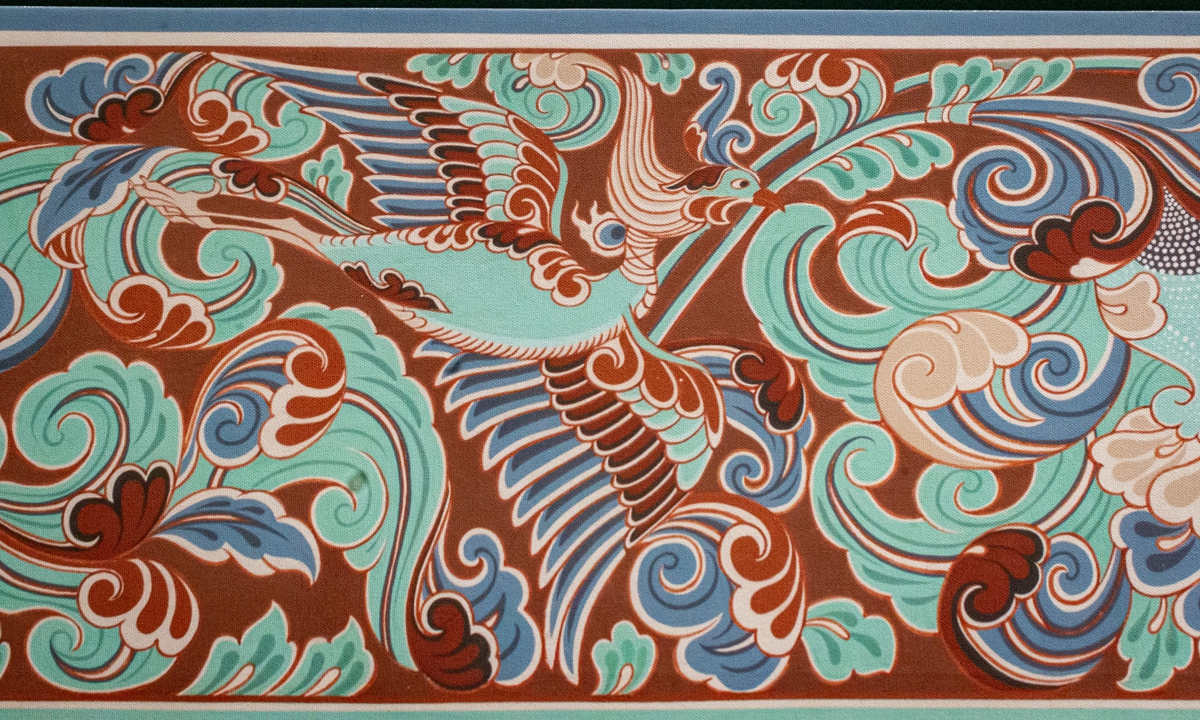
As an important part of Dunhuang art, decorative patterns are the carriers with the most rigorous compositional principles and the richest cultural spirit.
In the Dunhuang caves of Northwest China, there are numerous floral, cloud, flame, animal, and other decorative patterns. These patterns come from different periods and are found on and in structures and forms such as caisson ceilings, canopies, halos, costumes, border decorations and floor tiles, blending with statues, murals and architectural space.
Such patterns not only organically and harmoniously enriched and decorated murals, painted sculptures and entire caves, making them more splendid and perfect, but also developed their own period styles and characteristics, vividly recording the formation, change and development of Chinese decorative art and reflecting the social culture and customs of different times.
From the Sixteen Kingdoms (304-439) period through the Sui (581-618) and Tang (618-907) dynasties and beyond, Dunhuang cave mural art continued to evolve in both content and form with the changing times, and decorative patterns changed accordingly. From the three-petal leaf and honeysuckle patterns of the Northern Wei (386-534) to the scrolling-grass, baoxiang flower and linked-pearl patterns of the Sui and Tang and the medallion floral patterns dominated by mineral green in the Western Xia (1038-1227), Song (960-1279) and Yuan (1279-1368) periods, the pattern forms and color systems of different eras together form the historical lineage of Dunhuang decorative patterns, and also reflect the continuity and creativity of Chinese art.
I once led students in forming a research group on "Chinese Decorative Patterns of Dunhuang Through the Ages," systematically collecting, organizing, classifying and copying the decorative patterns on Dunhuang murals and painted sculptures, including the motifs. Through this sorting and copying, we conducted in-depth research and gained a full understanding of the historical culture, artistic features and decorative effects of each type of Dunhuang pattern, and clarified the causes, characteristics and historical evolution of each type. This is the "source" for contemporary design application.
Traditional patterns are an important source of inspiration for my designs. In design, on the one hand, the original appearance of traditional patterns should be preserved to a certain extent; on the other hand, they should be summarized, simplified, extended or enriched to make them more modern.
The ceiling pattern of the banquet hall of the Great Hall of the People was inspired by Tang Dynasty caisson patterns from Dunhuang. With a lotus as the center of the ceiling, and in line with the functional needs of the architectural structure, lighting and ventilation, it combines Dunhuang floral patterns with modern functions to create a spatial decoration with a distinctive national style. This design remains regarded as a model of the contemporary expression of traditional patterns.
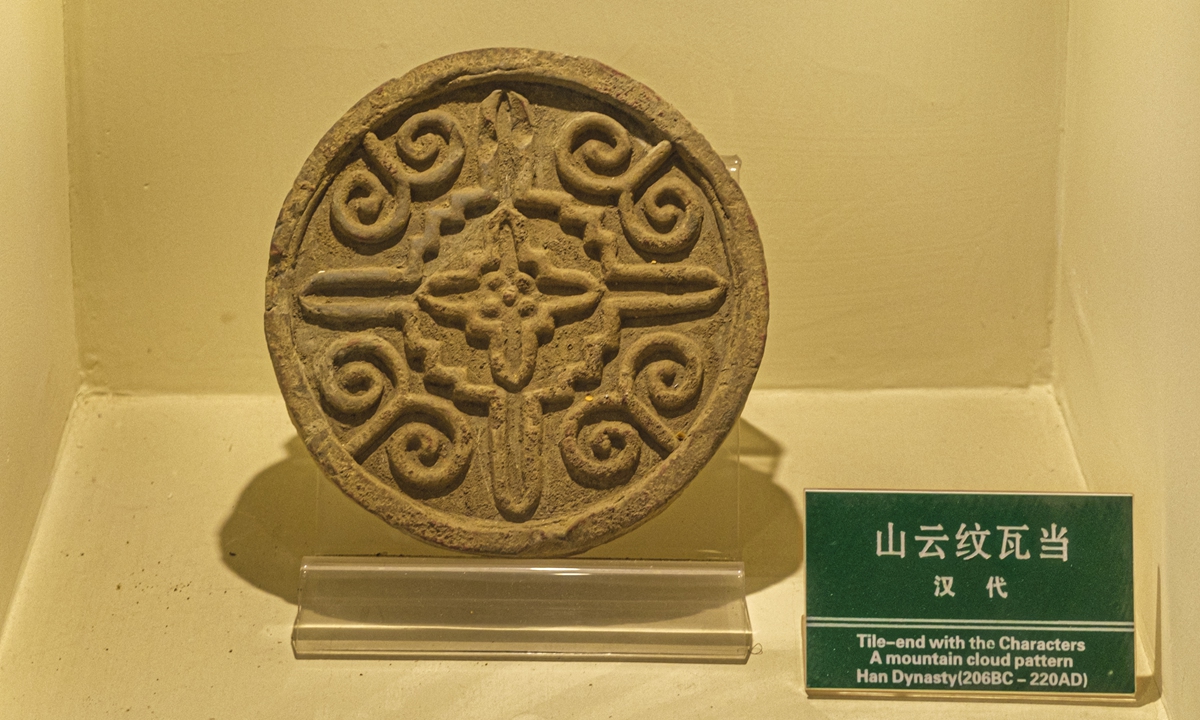
I was invited to serve as artistic consultant for the creative program "Nian Jin" (Auspicious Brocade) at China Media Group's 2024 Spring Festival Gala for the Year of the Dragon. Through natural patterns such as mountains and clouds of the Han Dynasty (206BC-AD220), bird and animal patterns such as flying phoenixes and auspicious lions of the Tang Dynasty, floral patterns such as peonies and laurels of the Song Dynasty, and auspicious patterns such as gourds and lanterns of the Ming Dynasty (1368-1644), we enabled the audience to appreciate the aesthetic tastes passed down by the Chinese people over thousands of years and the breadth and depth of fine traditional Chinese culture.
In contemporary society, as standardized, mass-produced industrial products have become dominant, people hope to find forms that reflect their own national cultural language and are distinctive, warm and pleasing. Traditional patterns can make people feel the depth of history and emotional warmth, and can further embody the cultural character of their nation through modern design.
The study and innovation of decorative patterns is a highly practical part of inheriting and promoting fine traditional Chinese culture. It concerns not only vision and beauty, but also cultural attitudes and identity. These patterns are not just a form of heritage found on murals or on other cultural relics; they can enter our daily lives and become cultural symbols in fabrics, utensils, spaces and even digital interfaces.
I believe that more and more later generations engaged in art and design will, on the basis of promoting fine traditional Chinese culture and adapting to people's current needs for culture, art and a better life, take innovative steps to create a new style of modern design art with Chinese characteristics - one that is national, scientific and popular, so that traditional Chinese decorative patterns can constantly generate new vitality and shine with new splendor.
The author is former president of the Central Academy of Arts and Design. This was compiled and translated by the Global Times English edition based on an article published by the People's Daily Overseas Edition on August 20.
。 9月27日,市委副书记、市长王庆海会见来辽参加第五届中国辽宁国际投资贸易洽谈会并到抚访问的韩国金泉市市长金忠燮一行。双方就进一步扩大经贸合作、加强人文交流等进行深入交流。 王庆海对金忠燮一行表示欢迎,对即将启幕的“金泉市市民节”和“金泉市民体育大会”提前表示祝贺。他说,2022年,习近平主席会见尹锡悦总统时提出,愿同韩方一道维护、巩固、发展好中韩关系。今年4月,省委书记郝鹏率辽宁省经贸合作代表团访问韩国,巩固深化了辽宁与韩国友好合作基础。抚顺市与金泉市自2011年缔结友好城市以来,在经济贸易、农业技术、旅游观光、文化体育等领域交流频繁、成果丰硕。

B | 当前,抚顺市正深入贯彻习近平主席重要指示精神,积极参与东北海陆大通道和东北亚开放合作枢纽地建设,以高水平开放引领高质量发展。

C | 金泉市在韩国被称为“忠、孝、礼”的故乡,历史文化悠久,自然资源丰富,与抚顺市有较强的产业关联性和互补性。希望双方进一步密切往来、厚植友谊,不断加深在农业、物流、体育等领域的务实合作,实现互利共赢、共同发展。

D | 金忠燮感谢抚顺市的热情接待,对抚顺市近年来经济社会发展取得的成绩给予高度评价。他说,金泉市与抚顺市缔结友好城市13年来,建立了深厚的友谊,双方在农业技术、农产品进出口贸易以及人文交流等方面广泛互动、紧密合作,取得了明显成效。希望以此次访问为契机,进一步扩大两市在农产品、新能源、交通物流、人文旅游、青少年交流等方面的友好交往,拓展合作空间,共享合作成果,携手推进两市友好关系迈上新台阶。 在抚期间,金忠燮一行还到辽宁三友农业生物科技集团、辽宁大自然仙灵芝生物科技有限公司、瑞尔赫满绣文化创意有限公司、抚顺新钢铁有限责任公司及抚顺矿业集团西露天矿等地开展考察访问。 副市长王进参加会见及相关活动。 责任编辑:刘春阳。
Current article:http://gbj.cengzaodengchawonin.cyou/news/20260826_152509.html
Published on:01:35:53
 台风“沙德尔”睁眼!中央气象台:睁眼的台风都是厉害家伙
 Ex-Tory Lawmaker: UK’s RAF Should Recruit the Best Irrespective of Sex & Ethnicity
 普京访华,俄高官纷纷发声
 工信部:完善汽车行业治理体系,严禁未经充分测试验证的产品进入市场
 《Lanterns》粉丝称第二集在众目睽睽之下隐藏了一位经典绿灯侠反派